


- April 19, 2018
- Theatre in Paris exclusives
- Amanda Mehtala
-
-


Blog last updated on the 06/25/2025
Why do we clap at the theatre?
Did you know that the average speed of our claps ranges from 2.5 to 5 claps per second? Some have said that clapping is like high-fiving yourself in a positive response to something that someone else has done.
Clapping is the most common sound that we, as humans, make, other than using our vocal cords. We do it as a social gesture to show approval and admiration in groups, in crowds, or by ourselves, and most often in the setting where we are presented with something like a show or performance. But what is the logic behind clapping? It crops up in every culture across the globe, and is one of the most universal means of communication. Let’s take a deep dive into the history of applause.
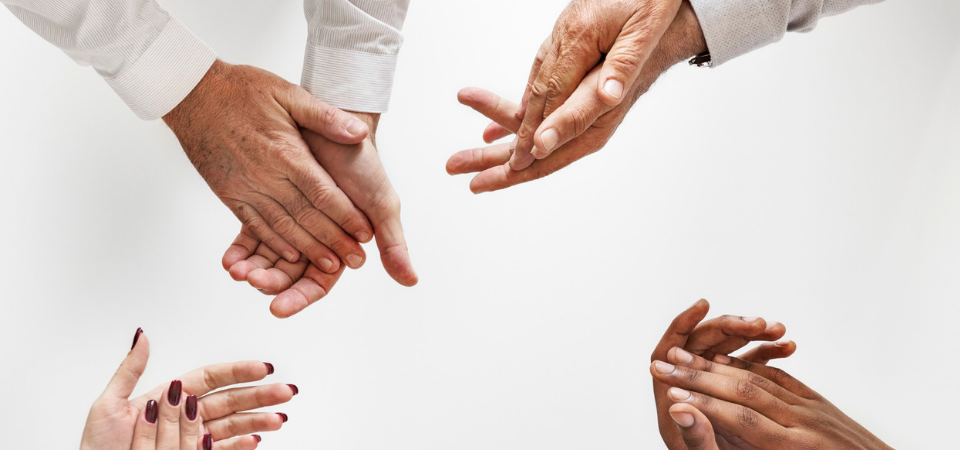
A primitive action
The action of clapping is actually a quite primitive one, initially being used in response to being aroused. A recent study showed when an individual applauds, it actually has very little to do with that person’s own opinion of the quality of the performance they have witnessed; it has more to do with the feeling of belonging in the group who have all experienced something collectively. Haven’t you ever heard someone say that they’re “just clapping to be polite”? Or when you applaud because everyone else is clapping, even if you’re not really sure what’s going on yourself? Don’t worry, we won’t tell anyone!
Applause in ancient times
In comparison to vocalizing approval through speech, clapping is easier, louder, and more anonymous, especially in crowds. You can’t tell much about a person through their clap, like their gender, age, or origin. Clapping is even considered more democratic, since stomping your feet can be seen as aggressive or disruptive, and not everyone can snap their fingers. Way back in the 6th century BC, lawmaker Kleisthénes of Athens decided that audiences should clap to demonstrate their approval of their leader, since there were too many people to determine their approval one by one.
Through this came “applause,” the unified voices of all these people, communicated through their clapping together in admiration. A few hundred years later, in the 4th century BC, came the claqueur. A claqueur was a person whom a theatre could hire to clap, cry, or laugh at the right moments in order to influence the other audience members’ reactions. In 4th-century Athens, competition was fierce between comedians, and claqueurs became a common tool used to sway the decision of the judges and, consequently, to bag the award for best performance. In the Roman Empire, the practice of using applause as a means of influence was applied to politics, and claqueurs were found in both courts of law and private art demonstrations. Emperor Nero even established a school of applause with a claque of thousands of knights and soldiers following his auditorium tours!
Applause in the 18th century
The history of clapping has a unique role in France and French venues as well. In 18th-century France, the claque had a strong presence as an organized body of professional applauders and influencers. They frequently attended theatres in order to sway the responses of the spectators, and were paid by the production and by the actors in free tickets. It was a highly organized affair, with certain claqueurs assigned to laugh loudly during comedic portions, others to shed a tear for a melancholic performance, and even claqueurs designated to comment their appreciation of a play or speech to fellow audience-members!
What about today?
Nowadays, however, the days of claqueurs are over, and all you’ll find in Parisian playhouses is true, rapturous applause. We do still find some traces of the practice however; the remnants of the claqueurs linger on television show sets and radio programs, in the form of applause symbols to indicate to the audience when they should be clapping, or even canned applause and laughter.
It is also interesting to note that there are appropriate times and places for applause. It is considered perfectly normal to applaud a politician as he takes the stage before he even gives a speech, as a sign of approval and in recognition of past accomplishments. In a religious setting, however, applause is very rarely heard. During a play, it would be deemed rude to begin applauding in the middle of the performance, although one often hears clapping throughout an opera in appreciation of a particularly difficult piece of music. Applause can even evolve into higher gestures of approval – standing ovation, anyone?
Overall, it’s safe to say that clapping has now evolved into an expectation and standard of behaviour. It’s no longer a biological or sociological reaction, like it once was in primitive times, nor is it any longer manipulated by private performance directors as a means of influence. The act of applause and clapping along with other people following a performance of any kind has become a social norm with a long list of historical influences. Isn’t it interesting how one simple gesture can be used as a means of political persuasion, and to demonstrate the utmost admiration? That alone deserves a round of applause!
A Gift They’ll Never Forget!
Everyone has that loved one who is impossible to buy presents for, so why not give them a day to remember instead? With our gift card, they can choose to see one of our amazing shows, concerts, cabarets and more! And you can be safe in the knowledge that you’ve given them the best present of all — an extra-special memory to last a lifetime.
There’s More Where That Came From...
Whether you're a theatre aficionado or a first-timer, the Theatre in Paris newsletter has got what you need! At least once a month, receive a hand-crafted email for your browsing pleasure, listing the best exclusive updates, deals, programmes, and all things theatre.
You can also follow us on Facebook, Instagram, Pinterest, and TikTok by clicking the following link to see our Link in Bio page: Click here!