


- April 18, 2019
- All things Paris
- Anna Livesey
-
-


Blog last updated on the 5 August 2025
The Eiffel Tower and its history…
It’s the most visited monument in the world and the purest symbol of Paris, but did you know that the Eiffel Tower was only intended to stand for twenty years? Contemporaries called it an iron monster and the shame of France, longing for the day when the tower would vacate the Parisian skyline. But, though its status as the world’s tallest man-made structure only lasted 41 years, this ‘Iron Lady’ has proved herself to be immortal. Over 130 years since the Eiffel Tower’s spectacular inauguration, discover the story of Paris’ best loved monument.
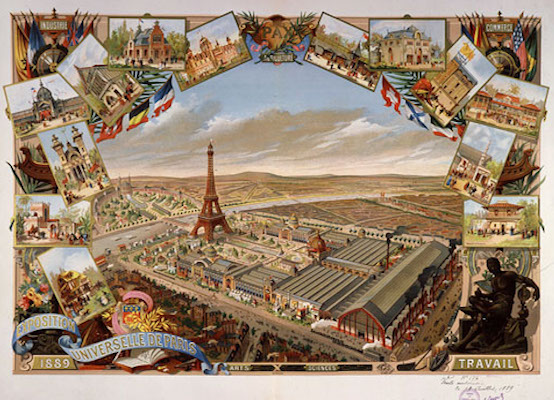
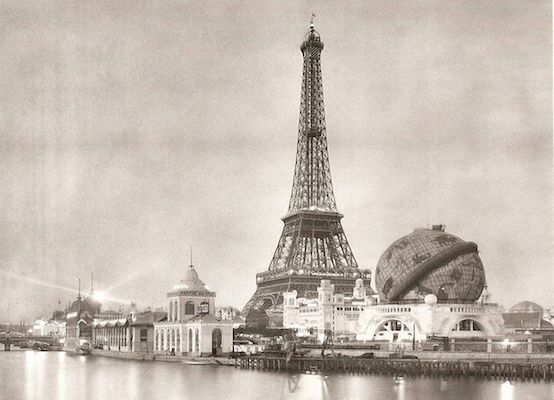
Paris Seeks to Prove its Prowess
Our story begins back in 1884, at the glorious height of the Belle Époque period.
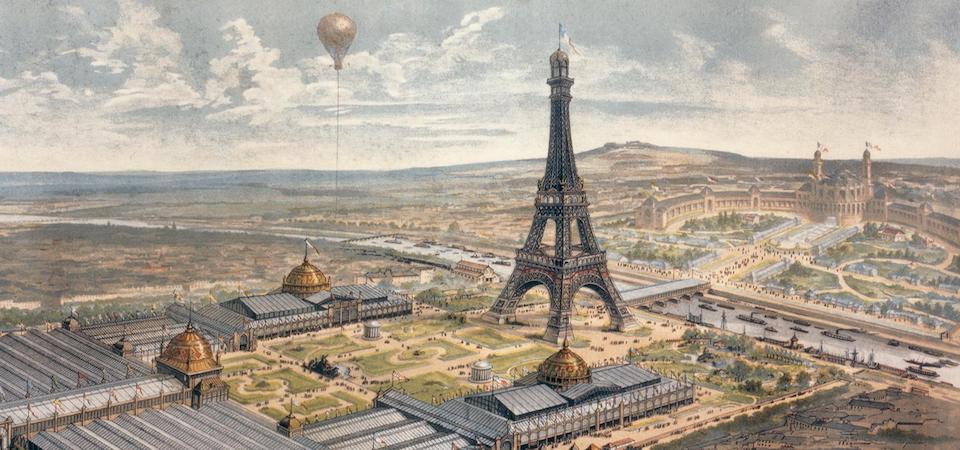
Almost a hundred tumultuous years had passed since the start of the French Revolution, and the country was experiencing an economic, cultural, and technological boom. To mark the occasion of this momentous centenary, it was decided that Paris would host the 1889 Universal Exhibition, an elaborate display of scientific and technological advances, featuring contributors from across the globe. France’s own industrial prowess was, naturally, to provide the backdrop – and what better manifestation of that than a towering iron structure sitting right at the exhibition’s grand entrance?
Monsieur Eiffel’s Tower Triumphs
The French government issued a call for structural blueprints, inviting architects to realize “the possibility of erecting an iron tower on the Champ de Mars with a square base, 125m across and 300m tall”. It was a challenge of Herculean proportions… just the kind to tempt two ambitious engineers working under the auspices of the illustrious Monsieur Gustave Eiffel.
Eiffel’s company had already cut its teeth on high-profile projects in France and abroad, including the renovation of the legendary Parisian cabaret house, the Paradis Latin, and even the construction of New York's Statue of Liberty.
Out of a hundred designs submitted to the exhibition panel, only those of Eiffel and his engineers were judged sufficiently thought-through to be feasible. Operation Build-The-World’s-Tallest-Structure-in-Paris was going!
Make the “Ghastly Dream” Go Away
But all was not yet rosy for Monsieur Eiffel and his team. The release of their architectural plans caused public uproar, with many contemporaries issuing statements of horror and disbelief. Some considered the building of a tower of that height to be, quite simply, an impossible task.
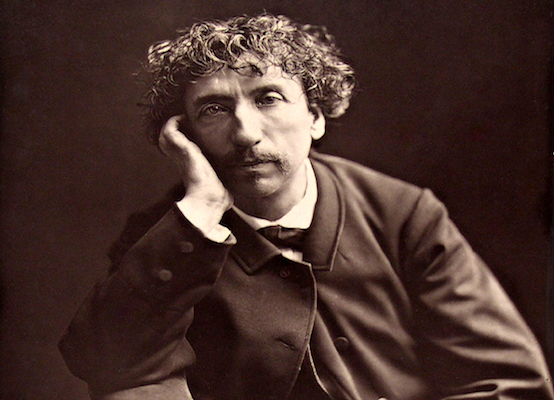
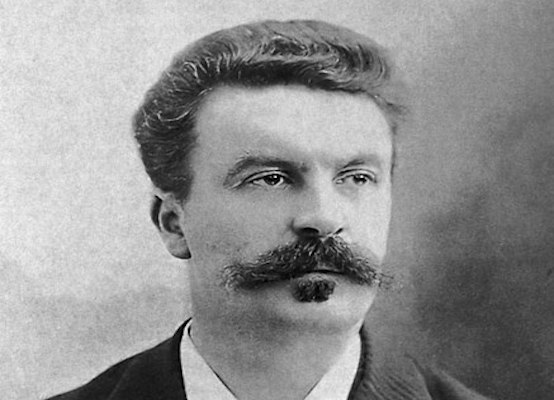
Others attacked Eiffel from an aesthetic standpoint, calling his tower an affront to French taste and the Parisian skyline. A ‘Committee of 300’ leading figures from the arts was formed to campaign against the build, led by legendary architect of the Paris Opera, Charles Garnier, and including the likes of writers Guy de Maupassant and Alexandre Dumas Jr..
The committee’s petition, ‘Artists Against the Eiffel Tower’, called on the Universal Exhibition’s management to revoke plans for the “giddy, ridiculous tower dominating Paris like a gigantic black smokestack, crushing under its barbaric bulk Notre Dame, the Tour Saint-Jacques, the Louvre, the Dome of les Invalides, the Arc de Triomphe”.
On With the Build
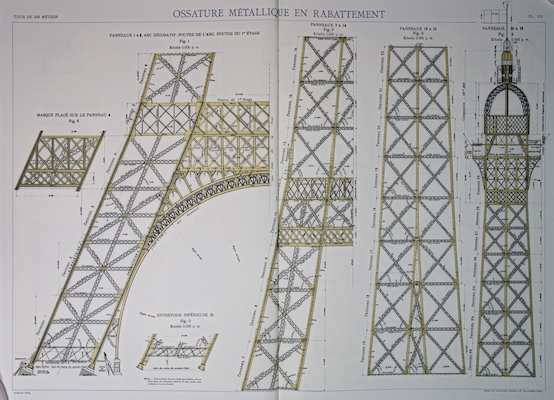
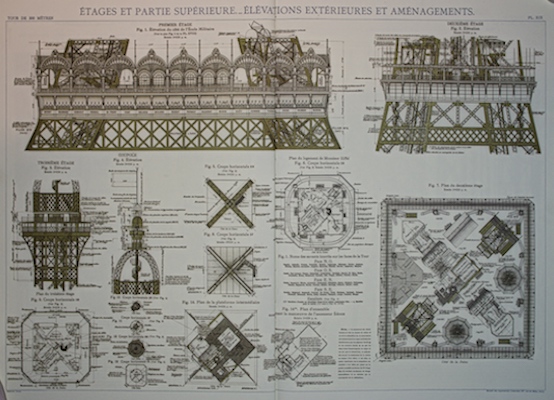
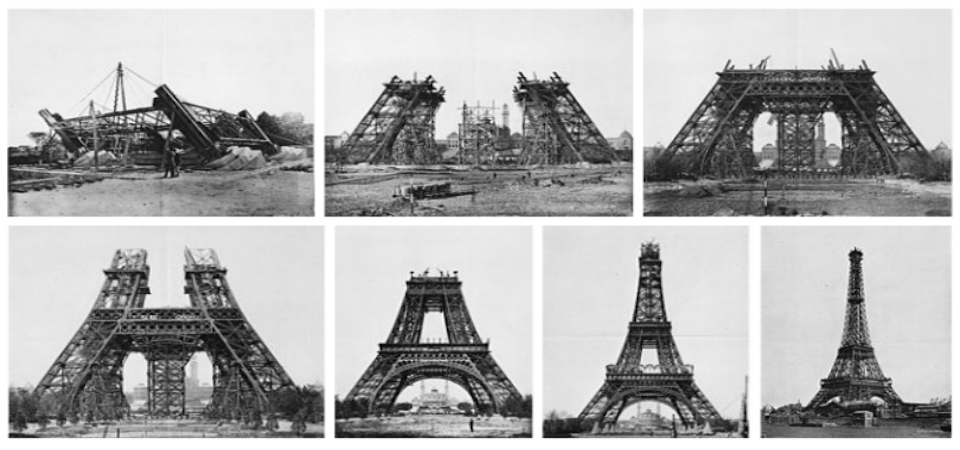
Despite these numerous detractors, construction of Eiffel’s tower commenced on 26 January 1887. Its blueprints consisted of 3,629 detailed drawings, instructing the joining of 18,038 parts by 300 on-site employees, using 2.5 million rivets.
With such intricate detailing, it’s incredible that the entire construction was completed in just 26 months - this was a groundbreaking feat considering the rudimentary methods of the time.
On 31 March 1889, just hours after his team had put the finishing touches to the tower’s structure, Monsieur Eiffel welcomed journalists and government officials for an inaugural tour. Those braving the climb to the top (lifts would not be installed for another three months) were justly rewarded by witnessing Eiffel crowning his creation with its first tricolour flag.
The Public Changes its Tune
Eiffel’s tower was an instant success upon its opening to the public, and by the end of the exhibition, it had welcomed almost 2 million visitors. Some critics had rethought their initial distaste, whilst others still remained unconvinced.
One of Eiffel’s staunchest disparagers, Guy de Maupassant, reputedly took his daily lunch in the tower’s restaurant, because only from there would the monument be invisible to him! But the ultimate sign of the tower’s success was Paris’ decision to let it stay. The city abandoned plans to tear the structure down after 20 years, when it proved its use as a telegraph pole for the first wireless transmissions.
Eiffel’s monument even served in the First World War: in 1914 the tower’s radio transmitter blocked German communications, hindering them in their advance towards Paris.

Eiffel’s Tower Today
The Eiffel Tower held its title as the world’s tallest building until 1930, when it was trumped by the Chrysler Building in New York. Contrary to the expectations of its contemporary critics, rather than bringing shame on its surroundings, the tower became Paris’ foremost monument and most iconic emblem.
Today, it attracts approximately 7 million visitors each year, making it the most visited paid-for monument in the world. A true feat of human innovation, Eiffel’s Iron Lady has become the jewel in Paris’ architectural crown.
-2-2.png)
If you liked this blog…
Want to expand your insider Eiffel Tower knowledge even further?
- Plan Your Ultimate Eiffel Tower Experience
- 10 Eiffel Tower Facts Parisians Don’t Know
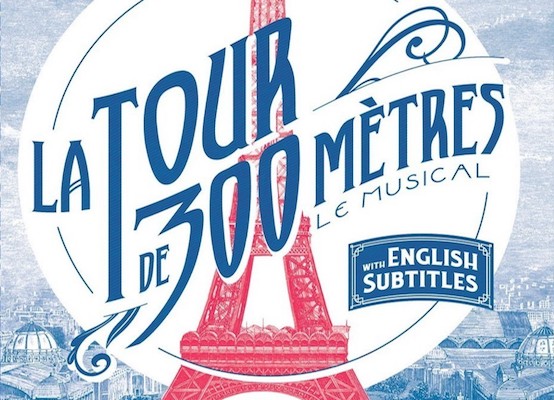
- Did you know that a musical was created about the Tower’s creation as part of its 130th birthday celebrations? Find out more about it here! (Show Ended.)
- Buy tickets to the Eiffel Tower Concert Series!
A Gift They’ll Never Forget!
Everyone has that loved one who is impossible to buy presents for, so why not give them a day to remember instead? With our gift card, they can choose to see one of our amazing shows, concerts, cabarets and more! And you can be safe in the knowledge that you’ve given them the best present of all — an extra-special memory to last a lifetime.
There’s More Where That Came From...
Whether you're a theatre aficionado or a first-timer, the Theatre in Paris newsletter has got what you need! At least once a month, receive a hand-crafted email for your browsing pleasure, listing the best exclusive updates, deals, programmes, and all things theatre.
You can also follow us on Facebook, Instagram, Pinterest, and TikTok by clicking the following link to see our Link in Bio page: Click here!