


- September 23, 2025
- Parisian theatre
- Eric Battye, Emma Houelle
-
-


The Past Brings the Future
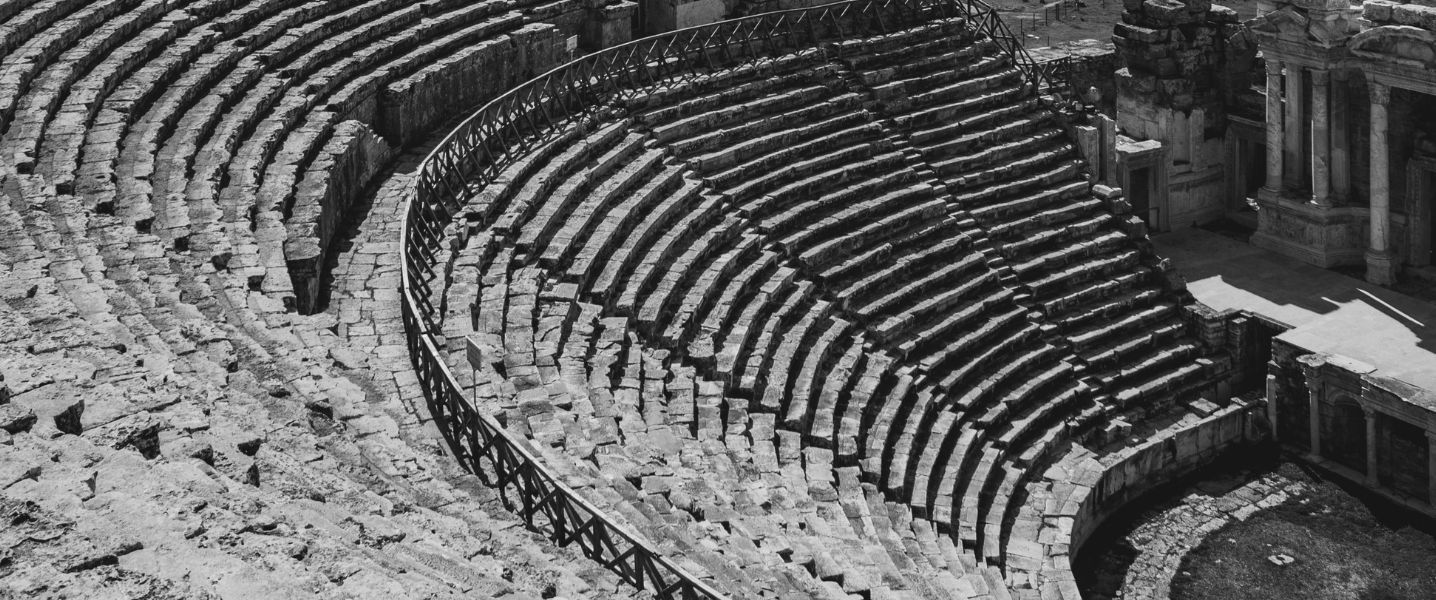
As we step back in time to trace theatre’s roots, we find ourselves not in Paris, but Lutetia. The year is 53 BC, and the Romans have taken and renamed the Gallic settlement Parisii. With them, they bring the hallmarks of Roman civilisation: bathhouses, aqueducts, and, of course, theatre. Lutetia is so prosperous that they decide to build its citizens the second-largest amphitheatre in all of Gaul, capable of holding up to 18,000 spectators. Unfortunately, over the centuries, the arenas eventually became buried.
Two thousand years after its construction, in the late 1800s, scandal erupts when this same arena is uncovered by building works. Could Paris really allow such a historic monument to be built over? The people waged war against the council, railing against the decision. Amongst these protesters was none other than Victor Hugo, who wrote the following words:
“It is not possible for Paris, the city of the future, to renounce the living proof that it was the city of the past. The past brings the future. The arenas are the ancient mark of the great city.”
Under growing pressure, the council conceded - the people had won! Thanks to their efforts, the Arènes de Lutèce still stand today, and you can visit them for free.
Just as the arena has endured, so too has theatre: an inseparable part of Paris’ history, and an undeniable part of its future.
This blog will take you through some of the city’s most fascinating theatrical moments, with show recommendations, must-visit spots, and hidden stories along the way.
Measly Middle Ages
We find ourselves now in the Middle Ages - sometimes called the Dark Ages.
Lutetia has long been called Paris. The Roman Empire is no more, and the city has become the capital of the Frankish kingdom. Its Kings and Queens rule under the authority of the Christian God, making Christianity a dominant force in daily life.
The city is a tense place to be, prone to unrest and riots. Religious tensions between Catholics and the emerging Protestants are on the rise - one spark could set off an explosion.
Once celebrated, theatre now worries the authorities. Performances draw in huge crowds with their comic and satirical takes on politics, religion, and social conventions. Officials fear that these large crowds could become violent and turn on their rulers, and so Parlement heavily restricts the staging of plays, allowing only a small handful of performances to continue.
No longer an institution, theatre continues informally in the city’s stress, under constant threat of being shut down if the performances stray into religious or political themes.
These, my friends, are truly dark ages.
Did you know? During this period of heavy censorship, actors and playwrights got creative by disguising performances as something else - religious ceremonies, street fairs, even puppet shows - to outwit the censorship laws and keep theatre alive.
A Renaissance Woman
Cheer up my friends, the dark ages are behind us! Society is flourishing. Long live the arts and the sciences! We are truly in a brilliant time.
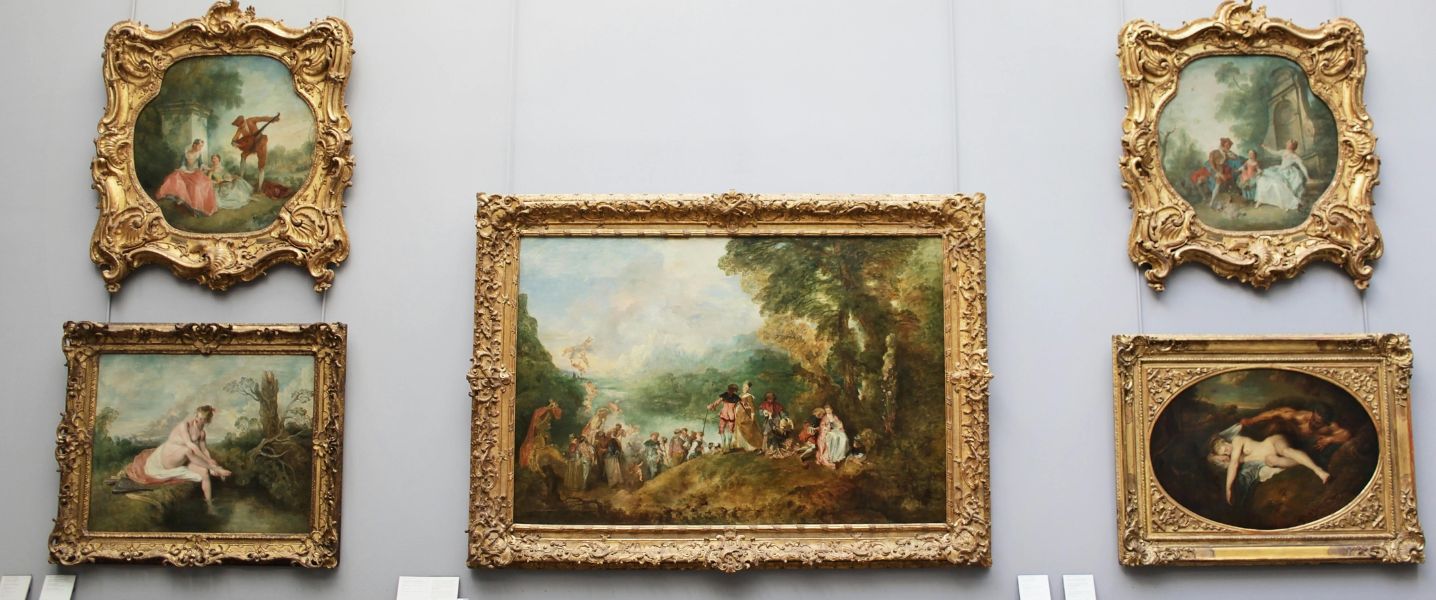
Our new queen, Catherine de Medici is a true renaissance woman, bringing over with her from Italy many different arts, including ballet, commedia dell'arte theatre, Italian Renaissance architecture and the delights of Italian gastronomy.
Thanks to the queen’s passion for the arts, theatre in Paris is evolving beyond its medieval roots, embracing Italian influences that bring new life to performances and captivate audiences. Paris is now becoming a vibrant cultural hub where innovation and creativity go hand in hand, setting the stage for a new age of brilliance.
Did you know? Commedia dell'arte relies on stock characters, such as Il Capitano, or The Captain, a swaggering braggart whose tells ridiculously exaggerated stories of his own military prowess and romantic conquests. Despite his boasting, he is easily frightened, often runs away from battle, and is frequently outwitted by other characters. This character can still be found in fiction today, from Captain Jack Sparrow in Pirates of the Caribbean to Gaston, the vain and arrogant hunter from the classic French fairy tale Beauty and the Beast.
Grande Siècle
Influenced heavily by commedia dell’arte, with a renewed interest in the classics (Ancient Greek and Roman), a new group of writers are taking Paris’ stages by storm. Amongst these are Corneille (Le Cid) and Racine (Phedre), and -perhaps the most famous of them all - Molière, who will go on to be known as “France’s Shakespeare".
We can see traces of both commedia dell’arte and classical theatre in Molière’s Scapin the Schemer (1671): Scapin is modelled directly on Arlecchino, characterised by his slapstick humour, disguises, and trickster schemes. The famous (and hilarious) bag scene where Scapin persuades his master to hide inside a sack - and then proceeds to beat him - is a classic commedia gag. Molière draws his plot from Plautus, who wrote multiple comedies in which a scheming slave manipulates his masters, just like Scapin.
There we have it: the past truly does bring the future. Without the influence of the Romans, or Catherine de Medici, many of Molière’s brilliant plays would not exist.
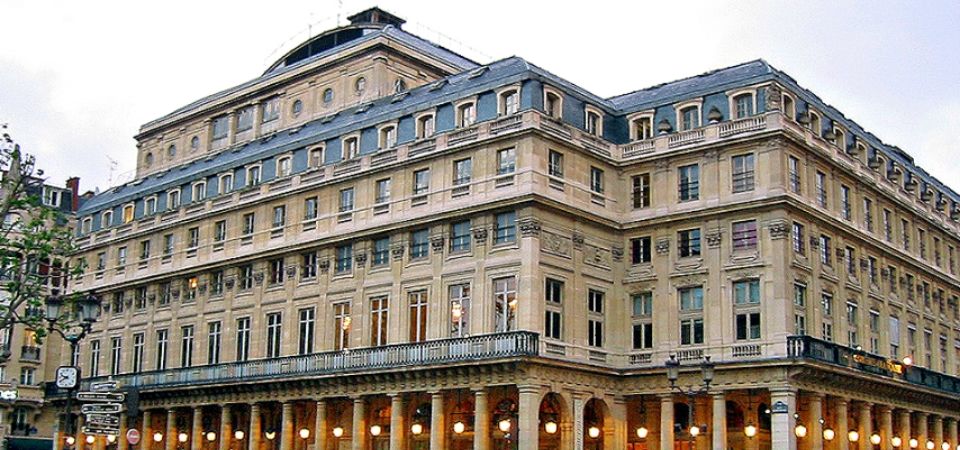
Neither would the most famous theatrical institution in all of France: the Comédie-Française. We are now in 1680, 7 years after Molière’s death, and Louis XIV has merged the two most important drama troupes in all of Paris, unifying the dramatic stage and standardising the repertoire.
Almost 350 years on, the Comédie-Française continues to delight its audiences, offering world-class performances for affordable prices. Whilst they are renowned for their continuation of the classics, they also stage contemporary pieces, meaning that there is truly something for everyone!
You Say You Want a Revolution…
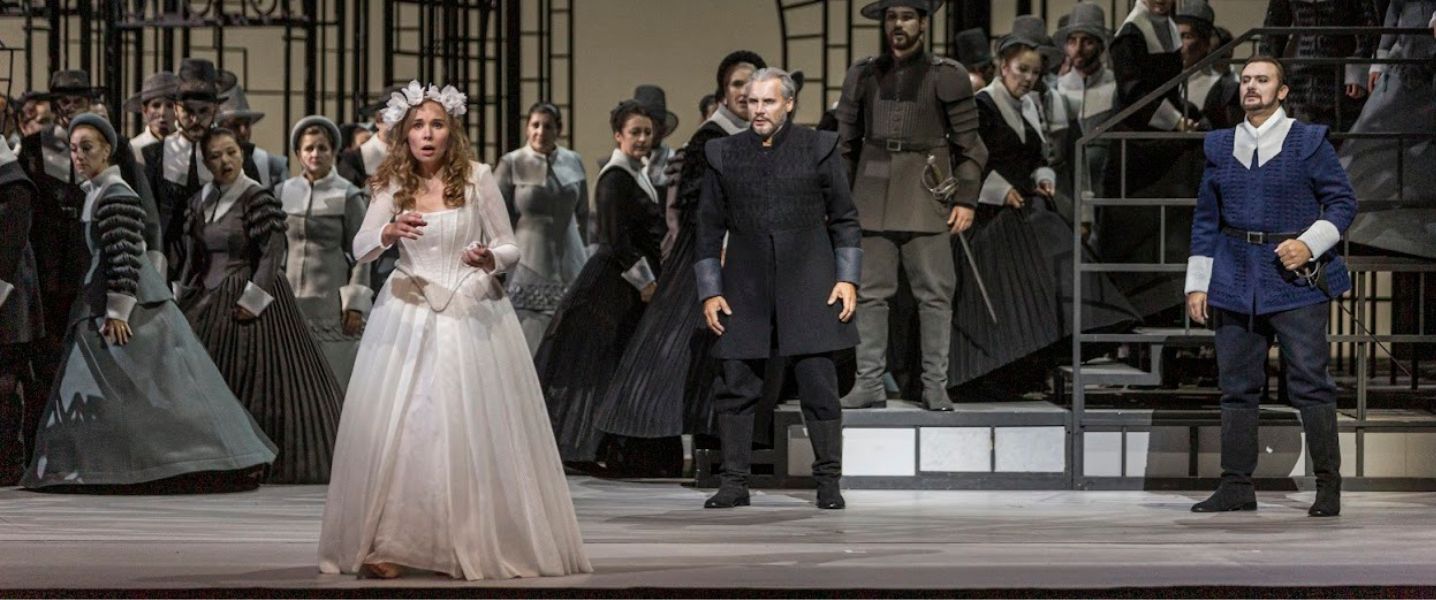
The year is 1784, the streets of Paris are buzzing with scandal. A new play by Pierre-Augustin Caron de Beaumarchais (better known as Beaumarchais) is about to make history at the Comédie-Française. The play’s name? The Marriage of Figaro.
On the surface, it is a classic comedy of disguises, tricks, and love affairs. But listen closely, and you will understand why it has become so notorious. Figaro, a servant, dares to challenge his master, Count Almaviva, ridiculing the privileges of the nobility with sharp wit. Although Molière’s Scapin the Schemer followed a similar plot, Scapin did not openly critique the system to the extent Figaro did. In a society where the King reigns and birth determines destiny, this is nothing short of revolutionary.
In a private viewing, Louis XVI is reported to have stood up during Figaro’s tirade against the government and state prisons and declared:
"That's detestable; that shall never be played; the Bastille must be destroyed before the license to act this play can be any other than an act of the most dangerous inconsistency. This man scoffs at everything that should be respected in a government.”
Yet, performed it was. Audiences roared with laughter and applause, Figaro’s bold words mirroring their own frustrations. Just five years later, the Bastille would fall, and the revolution would be set in motion.
Theatres during the Revolution became meeting points for ideas, protest, and celebration. The Marriage of Figaro was no longer just entertainment: it was a mirror, reflecting a world where servants outwitted their masters and the people claimed their voice.
Romanticism
Let us now fast-forward to the 19th century. The Revolution and the Napoleonic era have left their scars, and now artists and writers are turning to emotion, history, and heroism: welcome to the Romantic era.
We are reunited with Victor Hugo, the towering figure of French Romanticism. Parisian stages are now alive with dramas like Hernani (1830) - which famously caused a riot at its premiere. Why? Because Hugo broke the rigid rules of classical theatre. His heroes are characters from all walks of life, speaking in a mixture of verse and prose, common dialect and upper class register.
Paris itself has become a character in Romantic theatre. In Les Misérables, we see the streets, barricades, and cathedrals of Paris become living symbols of hope and rebellion. Theatre of this era is no longer just entertainment—it is a call to feel, to imagine, and to remember the revolution.
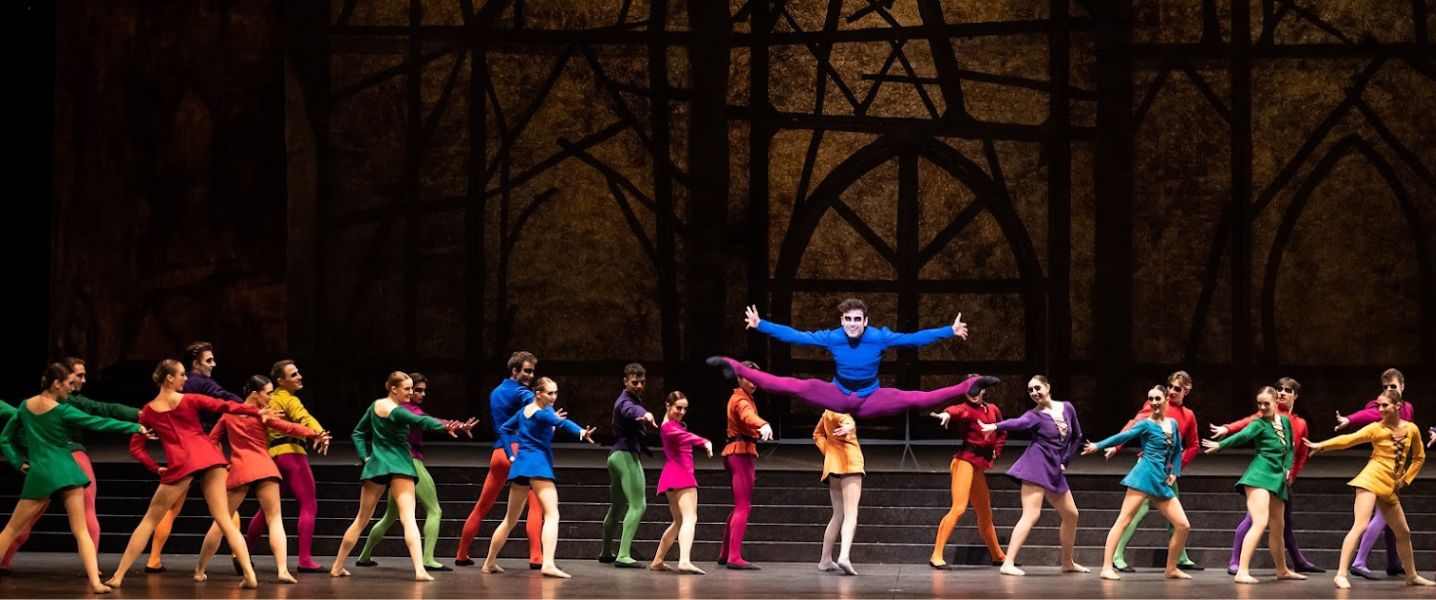
Many of Hugo’s literary works will also go on to grace the stage: for example, his masterpiece book, The Hunchback of Notre Dame, has been transformed into a vast, sumptuous musical, as well as an epic, tragic ballet.
 (2).jpg)
The Absurdity of Life
How can we represent reality? How, after two world wars, mechanised killing and the invention of the nuclear bomb, can we make sense of life and the world around us?
Maybe, the world has lost all meaning. Maybe, as Camus teaches us, life is absurd.
Playwrights are reflecting this: for example, Ionesco’s The Bald Soprano (1950), where characters speak in circles, conversations collapse into nonsense, and meaning itself seems to evaporate. Audiences are puzzled, amused, and unsettled all at once.
Yet, in this confusion, there is a strange clarity - a mirror is being held up to our strange lives, reflecting and poking fun at our modern existences. Absurdist theatre doesn’t offer answers, but it forces us to confront the collapse of old certainties, of seemingly obvious truths. The world will never be the same.
There We Were, Now Here We Are
Congratulations! We have managed to make it back to the present day in - more or less - one piece. The things we have seen over our travels through time have irrevocably shaped us, moulded us into who we are today.
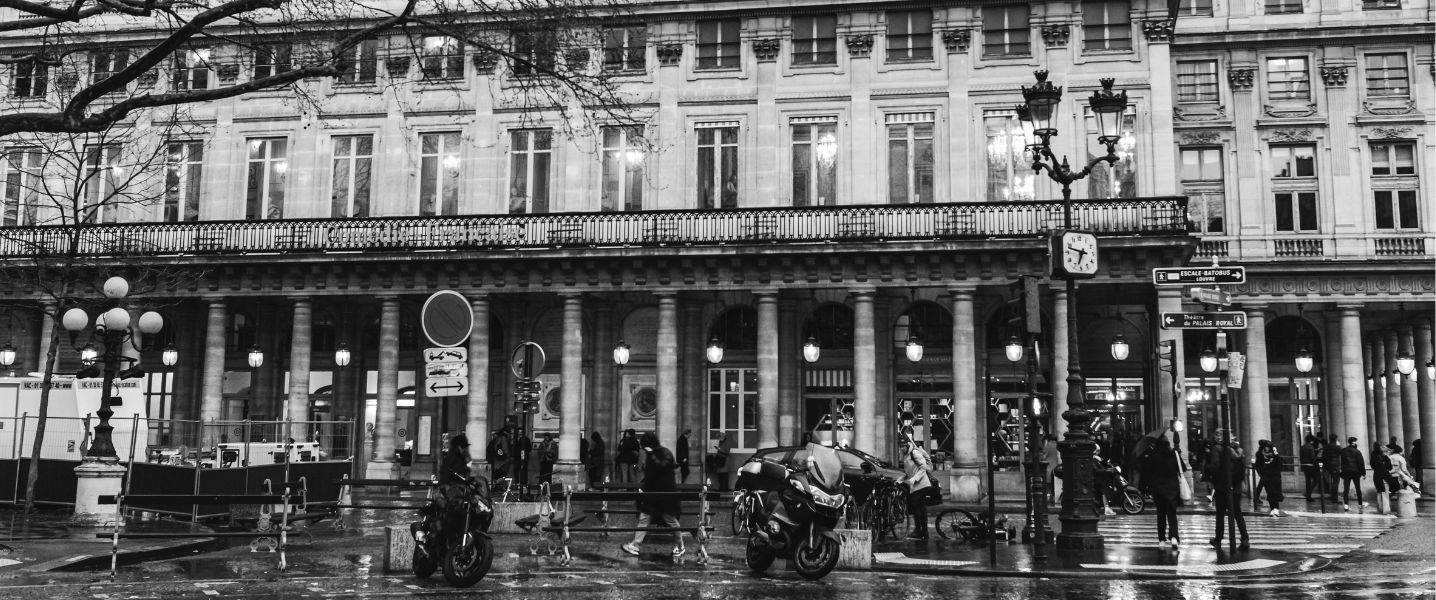
The future cannot arrive without the past, the future is a culmination of the past. Paris is a city haunted by theatrical ghosts. Molière continues to roam the stages of the Comédie-Française, and the contemporary dance pieces at Theatre Chaillot owe just as much to Catherine de Medici’s introduction of ballet to France as they do to Ionseco and the Absurdists.
Perhaps the next step forwards - the “not yet past” that will shape the future - is a technological one. As Paris welcomes ever more visitors and becomes increasingly multicultural, its stages are beginning to adopt surtitling technology to ensure that people from all languages and backgrounds can enjoy its theatre.
Who knows though? Only time can tell. One thing, however, is certain: the decisions we make in our lifetimes will forever shape those to come.
A Gift They’ll Never Forget!
Everyone has that loved one who is impossible to buy presents for, so why not give them a day to remember instead? With our gift card, they can choose to see one of our amazing shows, concerts, cabarets and more! And you can be safe in the knowledge that you’ve given them the best present of all — an extra-special memory to last a lifetime.
There’s More Where That Came From...
Whether you're a theatre aficionado or a first-timer, the Theatre in Paris newsletter has got what you need! At least once a month, receive a hand-crafted email for your browsing pleasure, listing the best exclusive updates, deals, programmes, and all things theatre.
You can also follow us on Facebook, Instagram, Pinterest, and TikTok by clicking the following link to see our Link in Bio page: Click here!