


- May 10, 2021
- Theatre in Paris exclusives
- Eléonore Duizabo
-
-


You’re probably familiar with the films Le Dîner de Cons, Le Prénom, or La Cage Aux Folles. But did you know that all of these movies are adaptations of French stage plays? In this blog post, you'll discover the French plays behind these cult classic films!
©Légende Films / Gaumont
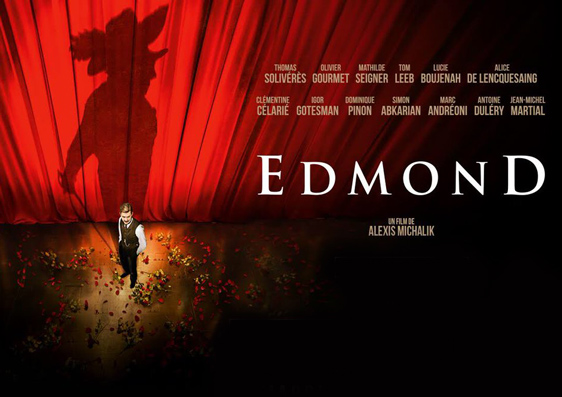
Edmond
After achieving a triumphant success at the Théâtre du Palais-Royal, Alexis Michalik adapted his play Edmond for the big screen. It was 2016 when Michalik presented his third play: Edmond. Within just a few months, the play became a must-see, and all of Paris was flocking to the theater to witness Michalik’s little masterpiece. In 2017, the play won five Molière Awards!
Edmond tells the story of young Edmond Rostand, who finds himself in a dilemma. He hasn’t written a single verse in two years, yet he has just promised the great actor Constant Coquelin a true masterpiece! The young playwright has only three weeks to write a play — and all he has is a title: Cyrano de Bergerac...
The play Edmond was first adapted into a graphic novel before Michalik decided to bring the story to the big screen himself. In fact, Michalik originally intended Edmond to be a film, but lacking a director, he decided to return to his roots in theater. To play the lead role in the film, he called on one of his favorite actors, Thomas Solivéres, along with Ludivine Sagnier, Tom Leeb, Olivier Gourmet, Lucie Boujenah, and Clémentine Célarié. As hoped, the film was a success and delighted both critics and audiences alike. You can still experience the play live at the Théâtre du Palais-Royal, as well as through the graphic novel and the film!

©Thomas Petri
Le Père
French playwright Florian Zeller has just won his very first Oscar for his film The Father! But before earning the coveted statuette for his film, Florian Zeller was already winning literary awards for his novels and plays. Over the span of 15 years, Florian Zeller wrote more than 10 plays, all of which were praised by critics. His plays The Truth, The Father, and The Son were quickly staged in England, and even Isabelle Huppert appeared in The Mother in New York. Critics are unanimous: Florian Zeller is one of the greatest writers of our time. And for good reason—no one writes plays as moving and gripping as Florian Zeller.
It therefore seemed obvious that his play The Father had to be adapted into a film. The playwright’s reputation preceded him, and Anthony Hopkins immediately agreed to take on the lead role in the film adaptation of the play. In the film, titled The Father in English, he is joined by Olivia Colman and Rufus Sewell. The story follows André (named Anthony in the film), an 80-year-old man whose memory is failing. He stubbornly refuses the caregivers imposed by his daughter. The elderly man feels his world slipping away, lost without any conscious or unconscious bearings, and aware that he’s living through his final moments of clarity. This deeply moving story, beautifully written, came to cinemas in May 2021, adapted by Florian Zeller himself.
The Father is the first play in a trilogy that also includes The Son and The Mother. Good news: The Son is also being adapted into a film, and once again, Hollywood’s finest are involved—Laura Dern and Hugh Jackman will star. Florian Zeller’s genius is recognized abroad, and French theater continues to shine around the world.
©Bernard Richebé
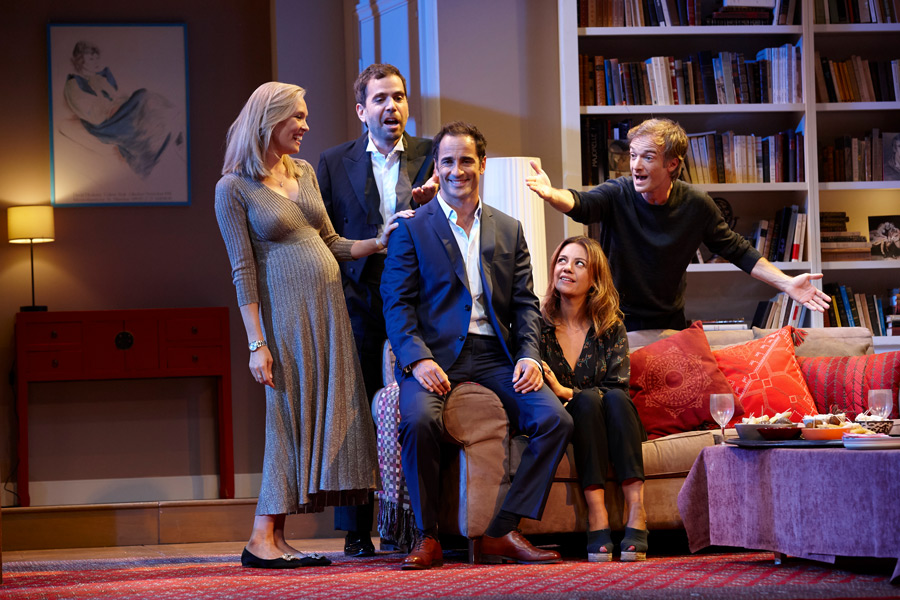
Le Prénom
Before the cult 2012 film, there was a stage play! In 2010, playwrights Alexandre de La Patellière and Matthieu Delaporte presented their play Le Prénom (The First Name) on the stage of the Théâtre Édouard VII in Paris. The play was a triumph at the Théâtre Édouard VII and was even revived in 2018. And who could resist this perfectly crafted comedy where the witty lines fly fast?
The play tells the story of Pierre, a forty-year-old soon-to-be dad. After a long day, he’s looking forward to spending the evening with family and friends. But the night turns into a real nightmare when Pierre reveals he wants to name his son Adolphe. Tongues quickly start wagging, and the evening spirals into a full-blown showdown!
Following the success of the play, the two playwrights decided to adapt it into a film—and we can only thank them for it. The movie was released in theaters in 2012 and was a huge hit. Actors Valérie Benguigui and Guillaume de Tonquédec even won César Awards for their roles, which they had originated on stage two years earlier. With over 6 million tickets sold, Le Prénom has become an iconic French comedy, and while you wait to see it on stage again, don’t hesitate to laugh out loud with the film!
Cyrano
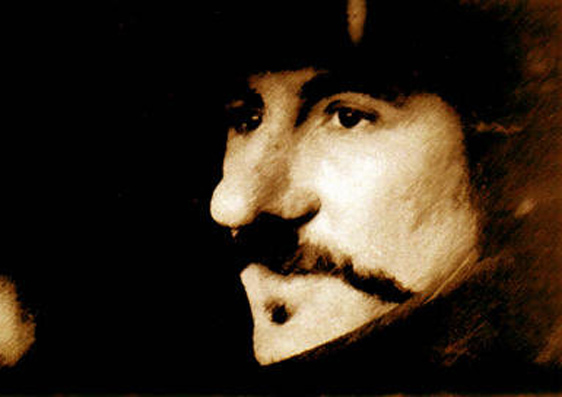
As you might have guessed, behind the film Cyrano lies Edmond Rostand’s most legendary play: Cyrano de Bergerac. When Rostand’s play was first performed in 1897 at the Théâtre de la Porte Saint-Martin, he was convinced it would be a failure. Yet, the public flocked to hear the poet’s verses. (To learn all about the creation of Cyrano de Bergerac, be sure to see the play Edmond at the Théâtre du Palais-Royal!)
At the end of one performance, the Minister of Finance, Georges Cochery, pinned his own Legion of Honor on Rostand’s chest, saying he was “getting ahead of the game.” The playwright’s destiny—and that of his play—seemed set in stone. Cyrano de Bergerac became, and remains, one of the greatest masterpieces in the French theatrical canon.
The play tells the story of Cyrano, a bold musketeer and brilliant poet. He is in love with his cousin Roxane but dares not confess his feelings because she is so beautiful, and he considers himself so ugly, cursed with an enormous nose: “Is it a cape?... it’s a peninsula!” Out of love, he agrees to help Christian woo Roxane. This iconic love triangle—the most famous in French theatre—has inspired countless works and has been adapted many times.
The most well-known adaptation is undoubtedly Jean-Paul Rappeneau’s 1990 film. The title character comes to life on screen through Gérard Depardieu’s powerful performance. All of France rediscovered Rostand’s poetic lines, and the film was a resounding success, winning 10 César Awards!
Cyrano de Bergerac is a timeless play that will never stop touching the hearts of its audience. More recently, Jean-Philippe Daguerre staged Cyrano de Bergerac at the Théâtre Le Ranelagh. Don’t miss this stunning production, which will soon return to the renowned Parisian theatre.
©Pierre & Le Loup / Atelier Théâtre Actuel
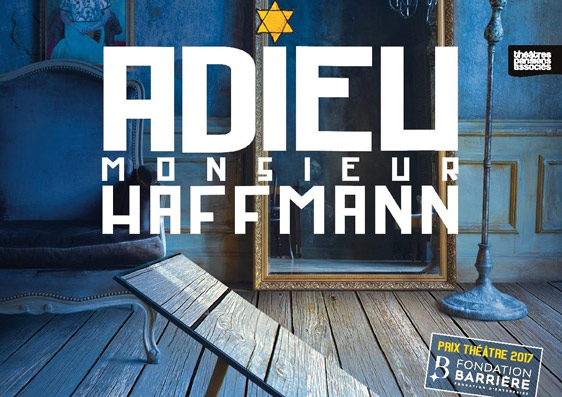
Adieu Monsieur Haffmann
Director and playwright Jean-Philippe Daguerre never disappoints—whether through his stagings of classical works or the contemporary creations of his company, Le Grenier de Babouchka. His play Adieu Monsieur Haffmann proves it once again! The play won four Molière Awards in 2018 and has since been applauded in several Parisian theaters. Jean-Philippe Daguerre blends intimate and historical tragedy in a gripping play where one life must be hidden to allow another to exist.
We’re in Paris in 1942, and the German occupation forces Jewish jeweler Monsieur Haffmann into hiding. He asks his employee, François, to shelter him. François agrees, but on one condition: that Monsieur Haffmann give his wife a child, since François is sterile. The jeweler agrees, although this arrangement does not please Blanche, François’ wife. Things become even more complicated when Haffmann’s jewelry grows popular among high-ranking Nazis, and François invites German ambassador Otto Betz to dinner.
A true stage success, the play was adapted for the big screen by director Fred Cavayé. The film stars Daniel Auteuil, Gilles Lellouche, and Sara Giraudeau. It was shot in the heart of the Montmartre district and had to be halted due to the COVID-19 pandemic. For several months, the transformed facades immersed an entire block in the 1940s!
The film Adieu Monsieur Haffmann was finally released in theaters on January 12, 2022. A moving story to experience both on the big screen and on stage at the Théâtre de l’Œuvre.
©Emilie Brouchon
Le Discours
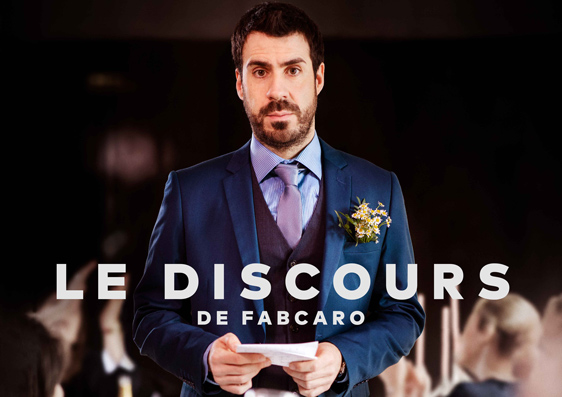
Alright, we’re cheating a little here—but we couldn’t ignore the phenomenon that is Le Discours. In June 2021, the film Le Discours, directed by Laurent Tirard, was released in cinemas. It features Benjamin Lavernhe, Sara Giraudeau, Kyan Khojandi, and Julia Platon. The film is based on none other than the novel of the same name by Fabcaro.
In 2020, the novel was adapted again—this time for the stage! Actor Simon Astier brought Fabcaro’s critically acclaimed novel to life in a theatrical adaptation. Fabcaro is best known for his comic books. His most famous one, Zaï Zaï Zaï Zaï, is unanimously praised by critics as absolutely hilarious. Then, in 2018, his debut novel Le Discours became a hit, followed two years later by Broadway.
In just 200 pages, Fabcaro tells the story of a slightly lost man in his forties, stuck at a family dinner. Things take a turn for the worse when his brother-in-law asks him to write a wedding speech. Through hilarious flashbacks and rough drafts of speeches, Fabcaro uses the character Adrien to deliver a sharp and intimate take on the world. But most of all, Le Discours is laugh-out-loud funny.
And laugh you will—with the stage adaptation of Le Discours, brilliantly adapted and performed by Simon Astier. Catch Le Discours at Théâtre Michel starting September 22, 2021. 1 hour and 35 minutes of nonstop laughter? That’s hard to pass up!
©Gaumont Buena Vista International / Francis Veber / affiche Marc Paufichet
Le Dîner de Cons
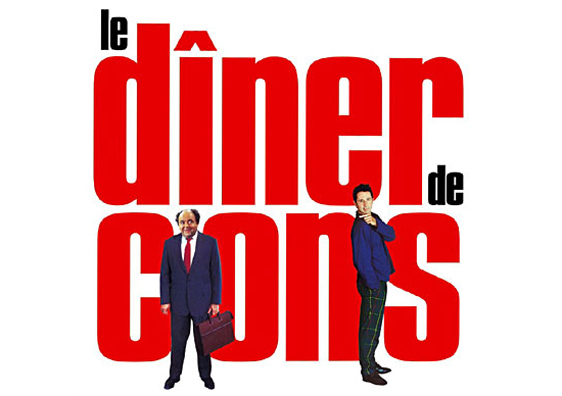
Who doesn’t know the iconic lines “Monsieur Pignon is sweet, Monsieur Brochant is mean” or “It’s exhausting being intelligent”? Since the release of the film Le Dîner de Cons in 1998, its quotes have become legendary, and Jacques Villeret’s portrayal of François Pignon is unforgettable. But before becoming a cult classic on screen, Le Dîner de Conswas first and foremost a stage play!
In 1993, Francis Veber premiered his play Le Dîner de Cons. It was an immediate hit and ran for three years before going on tour. Since then, the play has been performed numerous times in Paris. In 1998, Veber decided to adapt his play into a film, again casting Villeret as Pignon and Thierry Lhermitte as Brochant.
The story follows Pierre Brochant, who meets weekly with friends for a cruel game: each must bring the dumbest person they can find. When Brochant meets François Pignon, a man obsessed with building matchstick models, he thinks he’s found the perfect guest. But Pignon’s blunders quickly turn the evening into a complete disaster. A massive success at the box office and the César Awards, the film has remained etched in the hearts of audiences ever since.
Thanks to Francis Veber’s original play, we’re still laughing today at the wonderfully awkward character of François Pignon. So—when will this cult comedy return to the stage?
©Archives du 7eme Art/Photo12 - AFP
La Cage Aux Folles
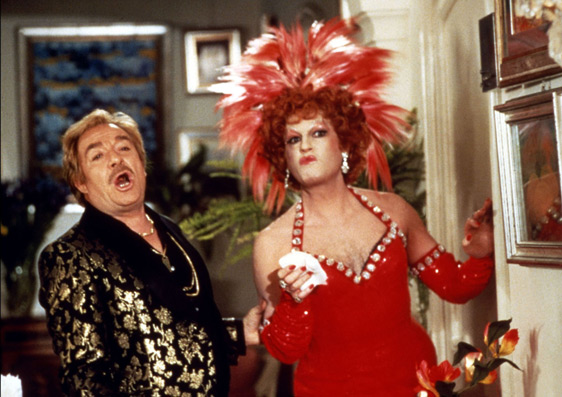
Here’s another film by Édouard Molinaro that comes straight from the stage. After its release in France in 1978, the film was a huge box office success and even became the most-watched foreign-language film in the United States! The success didn’t stop there—the film was adapted into a Broadway musical in 1993, where we got the iconic song “I Am What I Am.” Sequels La Cage Aux Folles 2 and 3 followed in the years after.
This global success is thanks to the play’s compelling plot: we’re in Saint-Tropez, where Albin and Georges run a drag cabaret, with Albin—aka Zaza—as the star performer. Their daily life revolves around showbiz chaos and minor arguments. One day, Georges is visited by his son from a previous relationship, who announces he’s getting married to a girl from a very conservative, upper-class family. Albin and Georges scramble to hide their true selves and reinvent themselves as the picture-perfect parents… An evening full of twists and turns awaits!
If La Cage Aux Folles is known worldwide, it’s thanks to the talent of playwright Jean Poiret. The play debuted in 1973 at the Théâtre du Palais-Royal. Jean Poiret himself played Albin opposite Michel Serrault as Georges. The show ran for more than five years at the Palais-Royal before moving to the Théâtre des Variétés. Since then, the play has been revived many times, and this joyful story continues to charm audiences around the world.
If you’re unfamiliar with the world of La Cage Aux Folles, we highly recommend watching Édouard Molinaro’s film, reading Jean Poiret’s original play, or listening to the cast album of the musical!
©Studio Canal / Mars Distribution
Huit Femmes
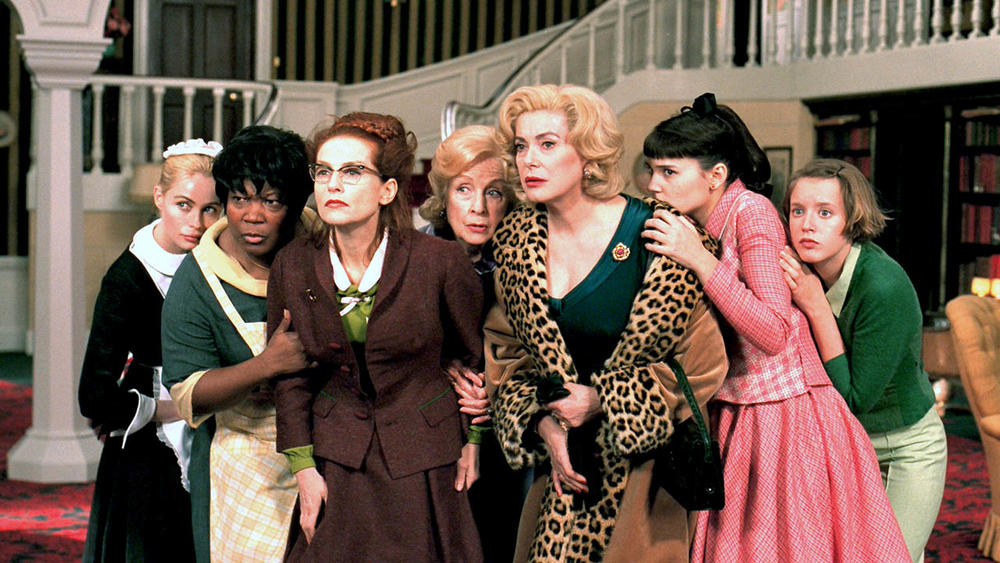
François Ozon’s film 8 Women (Huit Femmes) is indeed based on a stage play. It’s an adaptation of Huit Femmes by Robert Thomas. The play was first performed at the Théâtre Edouard VII in 1961. It was a true success and even won the Prix du Quai des Orfèvres, which rewards crime novels and plays. Then in 2002, François Ozon brought this dramatic crime comedy to the big screen—adding a few musical numbers along the way!
The plot is set in the 1950s, in a grand bourgeois home where preparations for Christmas are underway. But in the early morning, the family patriarch is found stabbed to death. The eight women present all have strong motives to be guilty. Yet only one of them struck the fatal blow.
In Ozon’s film, eight iconic French actresses bring Robert Thomas’s characters to life: Danielle Darrieux, Catherine Deneuve, Isabelle Huppert, Emmanuelle Béart, Fanny Ardant, Virginie Ledoyen, Ludivine Sagnier, and Firmine Richard. Much like a game of Clue, each woman is associated with a color—or more precisely, a flower. In this musical whodunit, it’s through songs by Sheila, Sylvie Vartan, and Dalida that the true culprit is revealed.
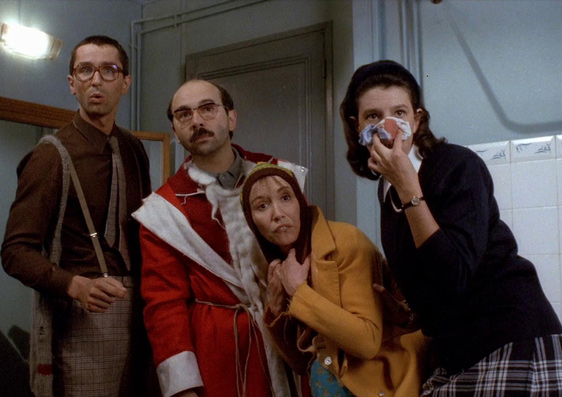
©Jean-Pierre Fizet/Films de Tinacra / Films du Splendid / Archives du 7ème Art
Le Père Noël est une ordure
When someone mentions Splendid, you probably think of the Théâtre Le Splendid on Rue Saint-Martin—but do you know about the Splendid troupe? Formed in 1974, it included Christian Clavier, Gérard Jugnot, Thierry Lhermitte, Michel Blanc, Josiane Balasko, Marie-Anne Chazel, and Bruno Moynot. They rose to fame thanks to the Les Bronzés films, but their biggest hit remains Le Père Noël est une Ordure, which they first performed in 1979. The public flocked to see it, and the play was later moved to the Théâtre de la Gaîté-Montparnasse before going on tour.
It was director Jean-Marie Poiré who approached the troupe to adapt the play for the big screen. And so, all of France discovered the story of two neurotics working the night shift at a crisis hotline (SOS Distress-Friendship) on Christmas Eve. Their night spirals into chaos when a pregnant woman, her boyfriend dressed as Santa Claus, and a drag queen barge into their office. Although the RATP refused to display the film’s posters due to its provocative title, that didn’t stop Le Père Noël est une Ordure from being a box office hit.
Thanks to numerous TV broadcasts, the film has become a staple of French pop culture, especially during the holiday season. While fans still hope to one day see the characters Félix, Josette, Thérèse, and Katia return to the stage, the film—and its iconic lines—remain endlessly rewatchable.
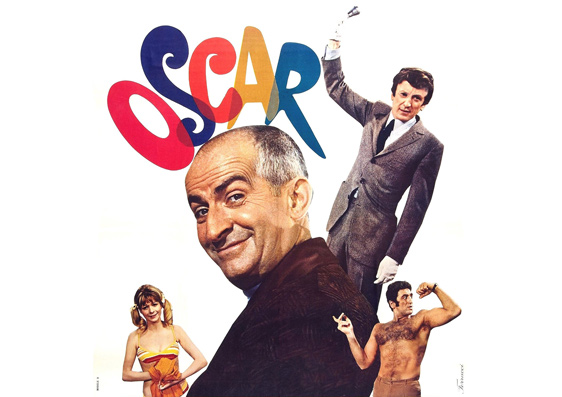
©Gaumont international / Affiche René Ferracci
Oscar
Behind Édouard Molinaro’s cult classic film lies a play by Claude Magnier. In 1967, the first performance of Oscar took place at the Théâtre de l’Athénée, featuring Jean-Paul Belmondo and Pierre Mondy. This high-energy comedy was revived many times in Paris. But it was truly when Louis de Funès took on the lead role that the play became a huge hit—it was performed over 600 times between 1959 and 1972, with de Funès’ improvised antics growing wilder with each show! It’s even said that the Shah of Iran attended the play several times during his visits to Paris.
Director Édouard Molinaro later decided to adapt the play for the big screen, and Louis de Funès reprised his signature role for the film version. In Oscar, he plays Bertrand Barnier, a wealthy businessman who experiences a completely chaotic day. His right-hand man, Christian, blackmails him for a raise so he can propose to his daughter—before admitting he’s been stealing from him for years. Things get even messier when Christian’s supposed girlfriend turns out not to be Barnier’s daughter, and in fact, his real daughter is pregnant by the family’s former chauffeur—Oscar! With twists, suitcase swaps, deception, and frantic chases, Oscar is one of France’s greatest comedies, both on stage and on screen.
The play was even adapted again into a film under the title Oscar (released in English as Oscar), starring Sylvester Stallone in the lead role. It has also been revived on stage several times, including a 2011 production where the role was rewritten for Amanda Lear and retitled Lady Oscar.
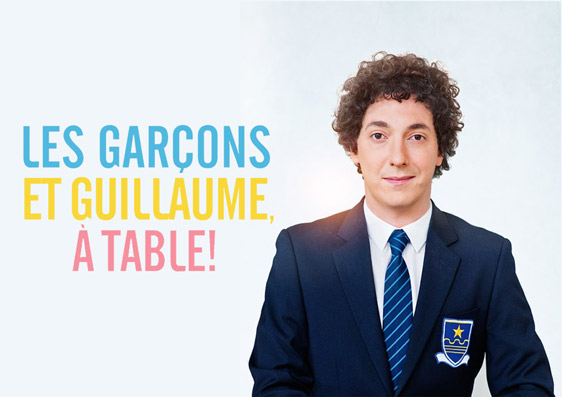
©Gaumont /LGM Cinéma, Rectangle Productions
Boys and Guillaume, dinner’s ready!
In 2013, Comédie-Française member Guillaume Gallienne released his first film: Me, Myself and Mum (Les Garçons et Guillaume, à table!). Following the success of his autobiographical one-man show, the actor decided to adapt it for the big screen. The film was a triumph, winning five César Awards, including four for Gallienne himself.
But let’s go back to the play that inspired the film. Les Garçons et Guillaume, à table! premiered in 2008 at the Théâtre de l’Ouest Parisien and later at the Théâtre de l’Athénée. In this solo performance, Guillaume Gallienne skillfully portrays all the characters. His talent was recognized with the Molière Award for Best Newcomer in 2010.
Les Garçons et Guillaume, à table! tells the story of Guillaume Gallienne’s life: his childhood, his relationship with his mother—who used to call him “my darling,” his sexuality, and his first loves. In the film, Gallienne plays both his younger self at various ages and the role of his mother. Overflowing with humor and insight, the film is as funny as it is moving. It’s a must-see.
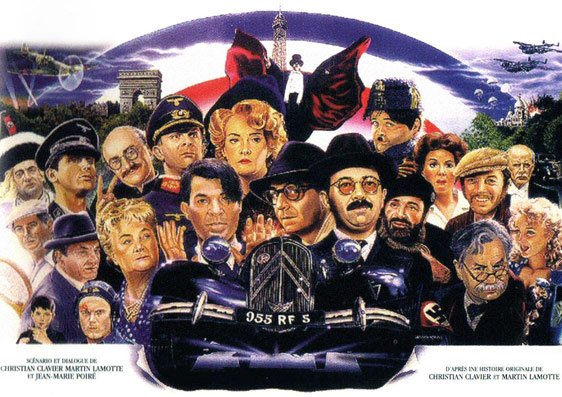
©Studio Canal
Gramps Is in the Resistance
Once again, it’s Jean-Marie Poiré who takes the reins of a film adaptation. It was through his collaborations with the Splendid troupe that he became known to the general public. In 1983, Poiré hit the jackpot with the release of Papy fait de la Résistance. The film is none other than an adaptation of the play of the same name by Christian Clavier and Martin Lamotte.
The play was first performed on stage in 1981 by members of the Splendid troupe in the very same theater. It didn’t take long for the idea of a film adaptation to occur to Christian Clavier, who immediately thought of Poiré. The producer, Christian Fechner, insisted on having a major star headlining the cast, and Louis de Funès was the obvious choice. Once de Funès agreed, the team began working on the adaptation. Sadly, de Funès—who was set to play Hitler’s half-brother—passed away at the start of the project. The film is dedicated to him, as it likely wouldn’t have happened without his involvement.
Nonetheless, the film features an all-star cast of some of France’s greatest actors: Michel Galabru, Roland Giraud, Martin Lamotte, and of course, the Splendid troupe.
These theater greats portray the Bourdelle family, who are caught in the chaos of the German Occupation. Their family mansion is requisitioned by the Nazis, forcing them to live in the basement. The son, Guy-Hubert, hides behind the persona of an effeminate hairdresser—but in reality, he’s Super-Resistant, a caped hero secretly plotting against the Nazis.
This parody of World War II resistance films was poorly received by critics at the time, yet it has since become a cult classic! And for your delight, Papy fait de la Résistance will soon return to the stage at the Théâtre de Paris. The cast will include Serge Postigo, Martin Lamotte, Catherine Jacob, and many more!